Health and Safety
for ALRA volunteers
Before undertaking any ALRA volunteering activities, it is very important that you are aware of the associated health and safety requirements, and any potential risks. Also, please be aware of each other's capabilities (age, health etc.), and try to make sure that no one over exerts themselves... all contributions are valued (without any judgement).
The Health & Safety Executive (HSE) recommend that a Safe System of Work is adopted for each activity, and that appropriate Personal Protective Equipment (PPE) is worn at all times, when working on footpaths, or in the road. The following documents and links should cover any activity that you are likely to undertake as an ALRA volunteer. However, if there's anything that you are not sure about, please speak to the person in charge (at the start of the session).
Note: If you don't follow the correct safe system of work and/or fail to wear appropriate PPE, there is an increased risk of injury (to both yourself and others) and, should an accident occur, you may not be covered by ALRA's insurance.
Safe Systems of Work
Adopting a safe system of work, minimises the level of risk for the task being carried out. Below, are suggested safe systems of work and guidance, when using power tools, ladders and stepladders:
Note: You should also work in a safe manner when using hand tools, as these too can be dangerous, if used inappropriately. Use the right tool for the job, keep the work area clear of debris, and consider others that may be working nearby.
Personal Protective Equipment
The risk of personal injury can also be reduced by wearing appropriate PPE (but please don't take any unnecessary risks). Below, is a list of PPE, and when you may need to use it:
- Gloves - can be used for most gardening activities, to protect your hands, particularly when handling spiked plants, brambles, nettles, etc.
- Eye Shields - should be used (over glasses, if worn) to protect your eyes from plant material and stones that could be flicked up when using (or working near) mowers and strimmers.
- Ear Defenders - will help to protect your hearing, when using noisy power tools.
- Safety Helmet - is advisable when working overhead, in the vicinity of someone working overhead, or when using a ladder.
- High-visibility Jacket - these should always be worn when working in the road, but it's sensible to wear one at all times (to help you to be seen by others).
Working on Footpaths
When working on estate footpaths, please:
- Use cones (if necessary) and suitable signs (if available), to warn footpath users, that work is (or will be) taking place.
- Be prepared to stop work (especially when using strimmers etc.), to allow people (including those with children and pets) to pass the work area safely.
Working in the Road
Before starting work in the road (e.g. clearing weeds and debris from the gutters), or temporarily placing debris, cuttings etc. in the road, you need to ask a couple of key questions:
Will someone using the road or footway from any direction understand exactly what is happening, and what is expected of them?
Have I made the site safe to work in, and for the general public?
Full details of 'Safety at Street Works and Road Works', can be found in this Code of Practice document. However, for the type of work carried out by volunteers, please consider the following:
- If working by the kerb, it would be sensible to park a vehicle in front of the work, and then place cones the same distance from the kerb in the work area beyond.
- If it's not practicable to protect the work area with a vehicle (e.g. when working close to a junction), then place cones in a taper, from the kerb to the width of the work area, and along its length.
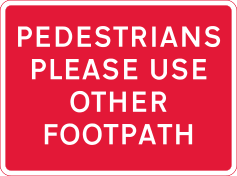
- If a footway (pavement) is blocked by people and debris (e.g. whilst cutting a hedge), then it's probably best to advise pedestrians to 'please use other footpath'.
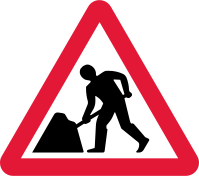
- If suitable signs are available (see below), then they should be used to warn pedestrians and motorists, that work is (or will be) taking place.


Chainsaws
Chainsaws are potentially dangerous machines, which can cause fatal or major injuries if not used correctly, and are NOT covered by ALRA's insurance. For this reason, their use at ALRA volunteering sessions is prohibited. Further information, relating to chainsaws, can be found on the HSE website.